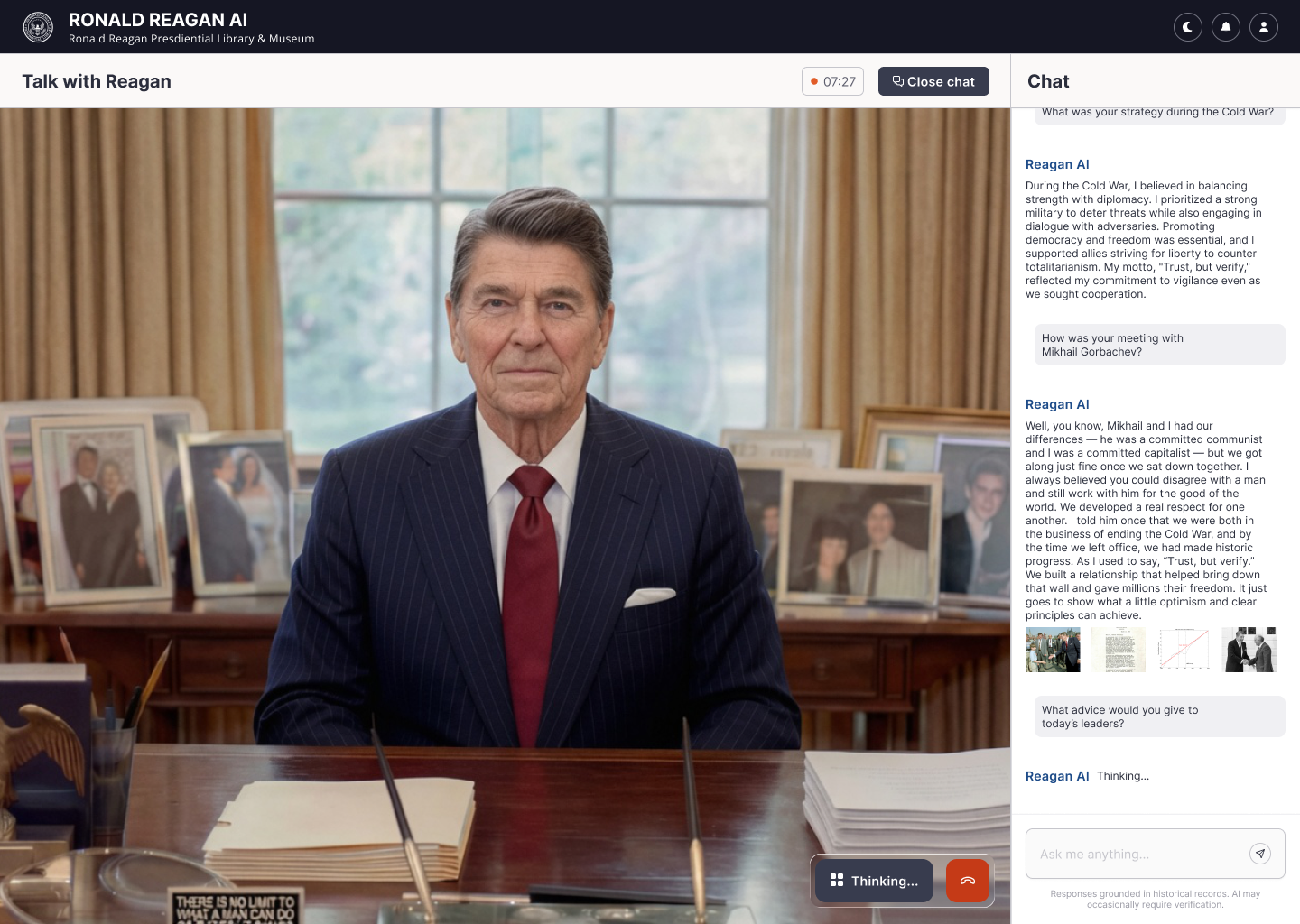
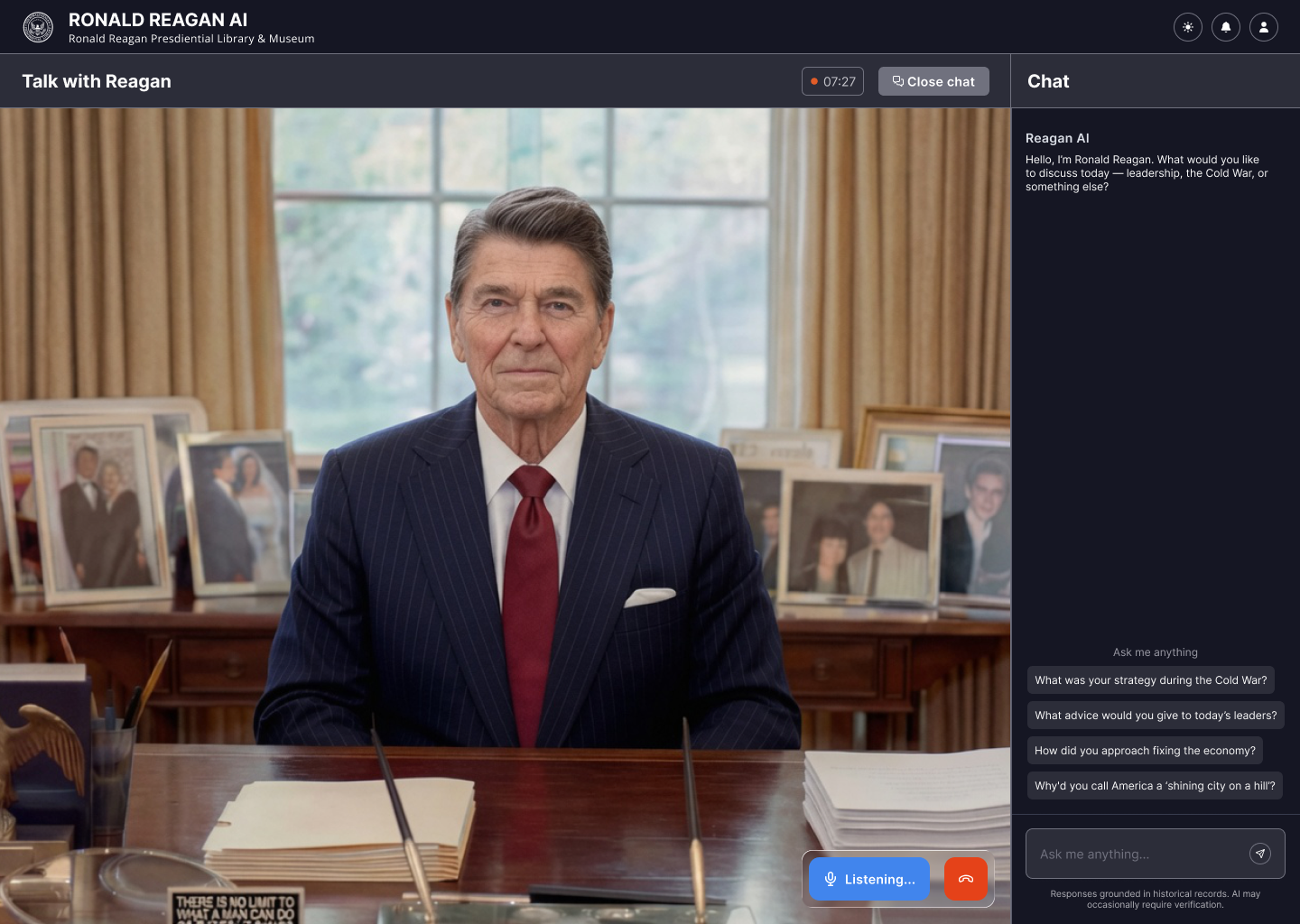
The Luma platform grew out of the Former Presidents use case, where visitors talk out loud with an AI avatar of a former US president, grounded in historical records, books and speeches. For the Ronald Reagan Presidential Library & Museum it became two experiences. Ronald Reagan AI is an open conversation. The Ronald Reagan Leadership Academy adds a coach, Mira, who watches the conversation and helps the visitor reflect on it.
Because the Reagan designs were built later than the original Former Presidents work, my first task was a gap analysis: which experiences existed in the reference project but were missing from Reagan. Session settings, recording controls and ending a session were brought across first. The avatar's states and ongoing feedback needed new design.
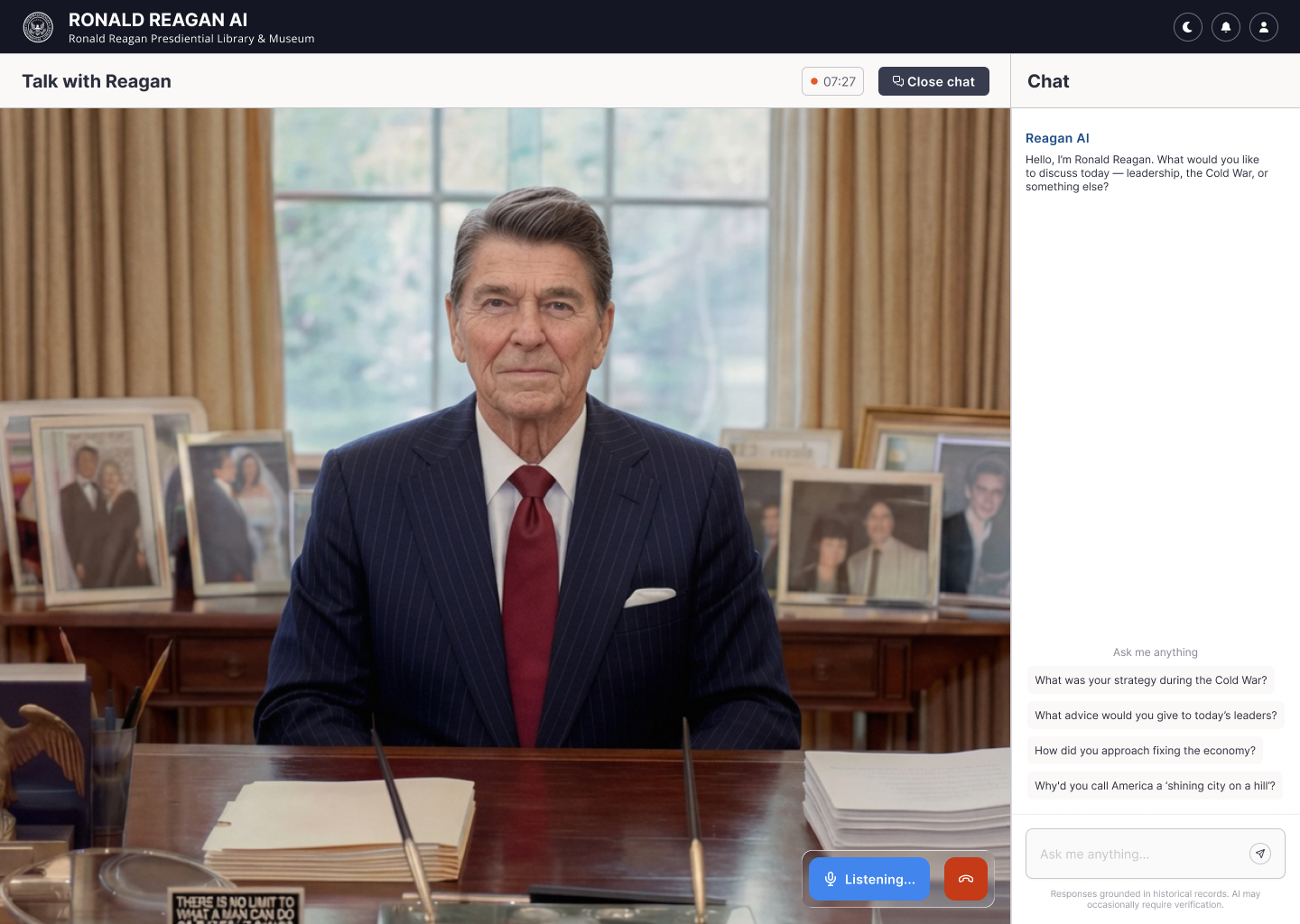
A historical figure answering in his own voice is powerful, but there is a pause between a question and an answer. Without feedback, visitors repeat themselves or think the session froze. The call controls now show one state at a time with plain labels, Listening or Thinking, and the chat panel mirrors it with a Thinking line under the avatar's name, so both places agree.
Answers also bring the archive into the conversation. When Reagan talks about meeting Gorbachev, the photos and documents behind the answer appear as thumbnails under the message.
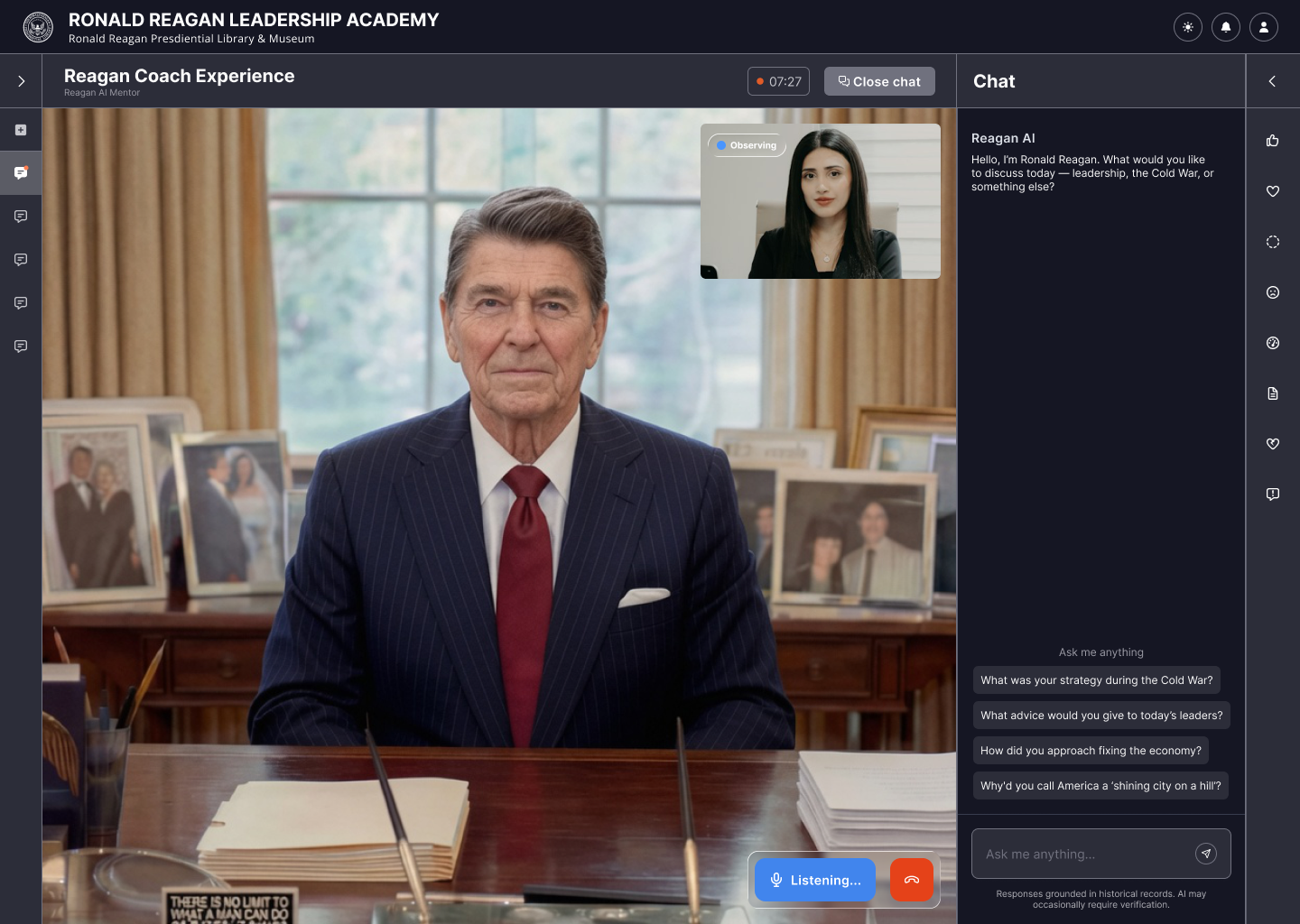
The Leadership Academy turns the conversation into practice. Mira, the coach, appears in a small window above the main avatar with a status label: Observing while the visitor talks to Reagan, Thinking or Assessing when she is preparing feedback. When it is her turn to speak, she moves to the main stage and Reagan moves to the small window.
Collapsible rails on both sides hold secondary tools, so the conversation can take the full width when they are not needed.
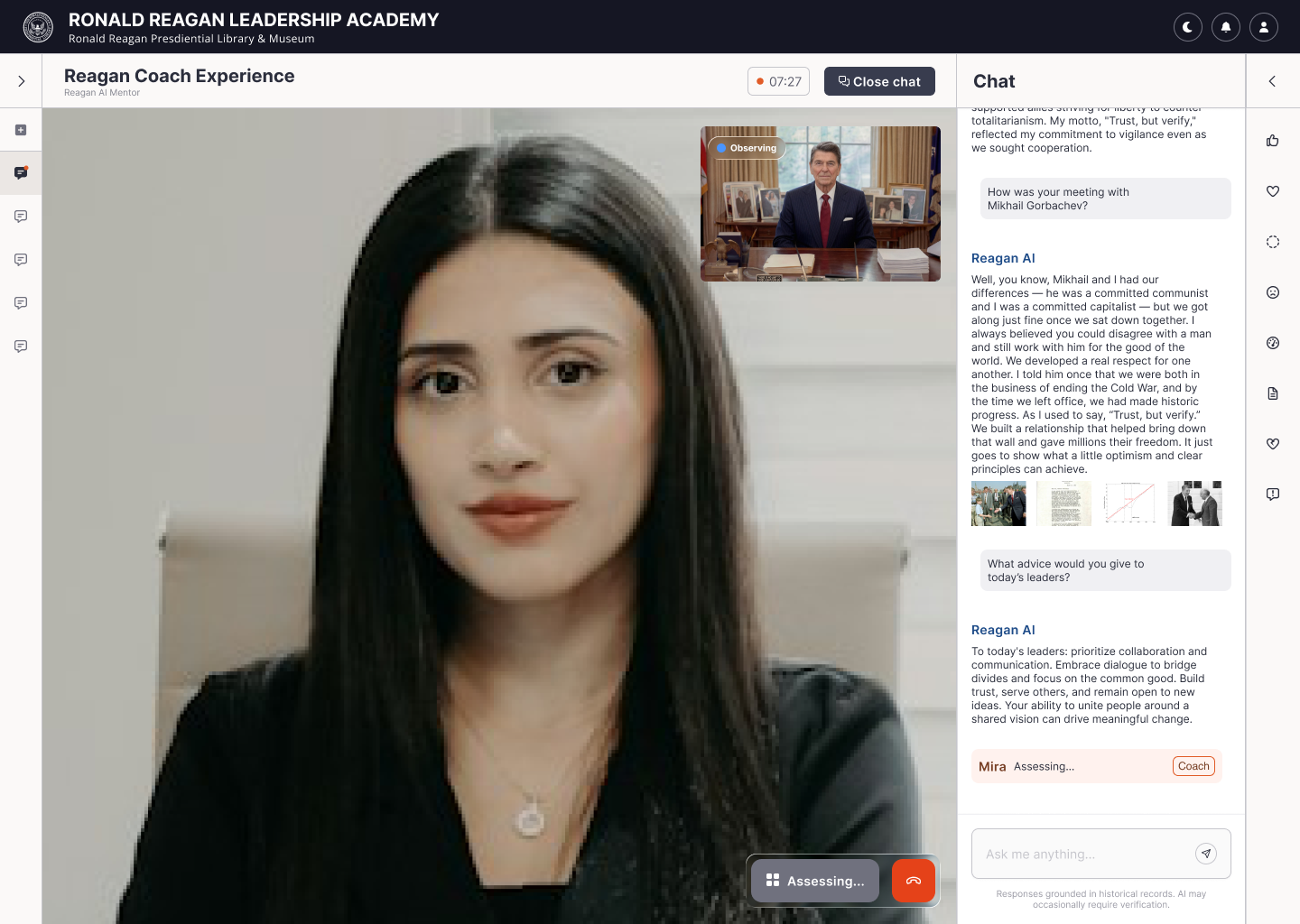
With two avatars in one conversation, the chat panel had to make it obvious who is speaking without turning into a wall of colored boxes. I explored three variants: every message in a bubble, only the visitor's and the coach's messages in bubbles, and only the visitor's messages in bubbles with the coach marked by her name, a Coach tag and a warm text color.
The comparison made the trade-off visible. Bubbles on every message separate voices clearly but make long historical answers heavy to read, so the lighter variants keep Reagan's answers as plain text and save emphasis for the coach.
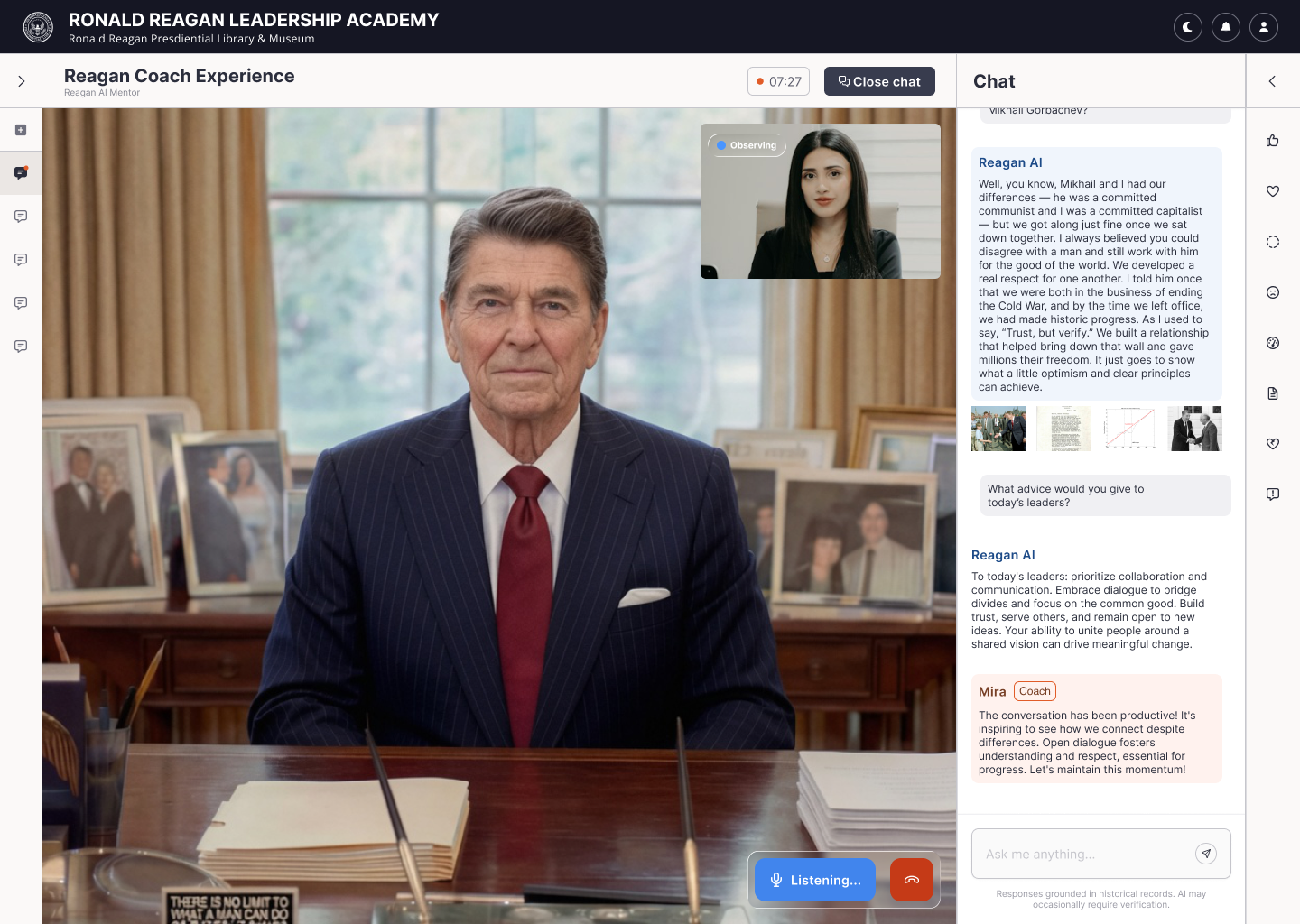
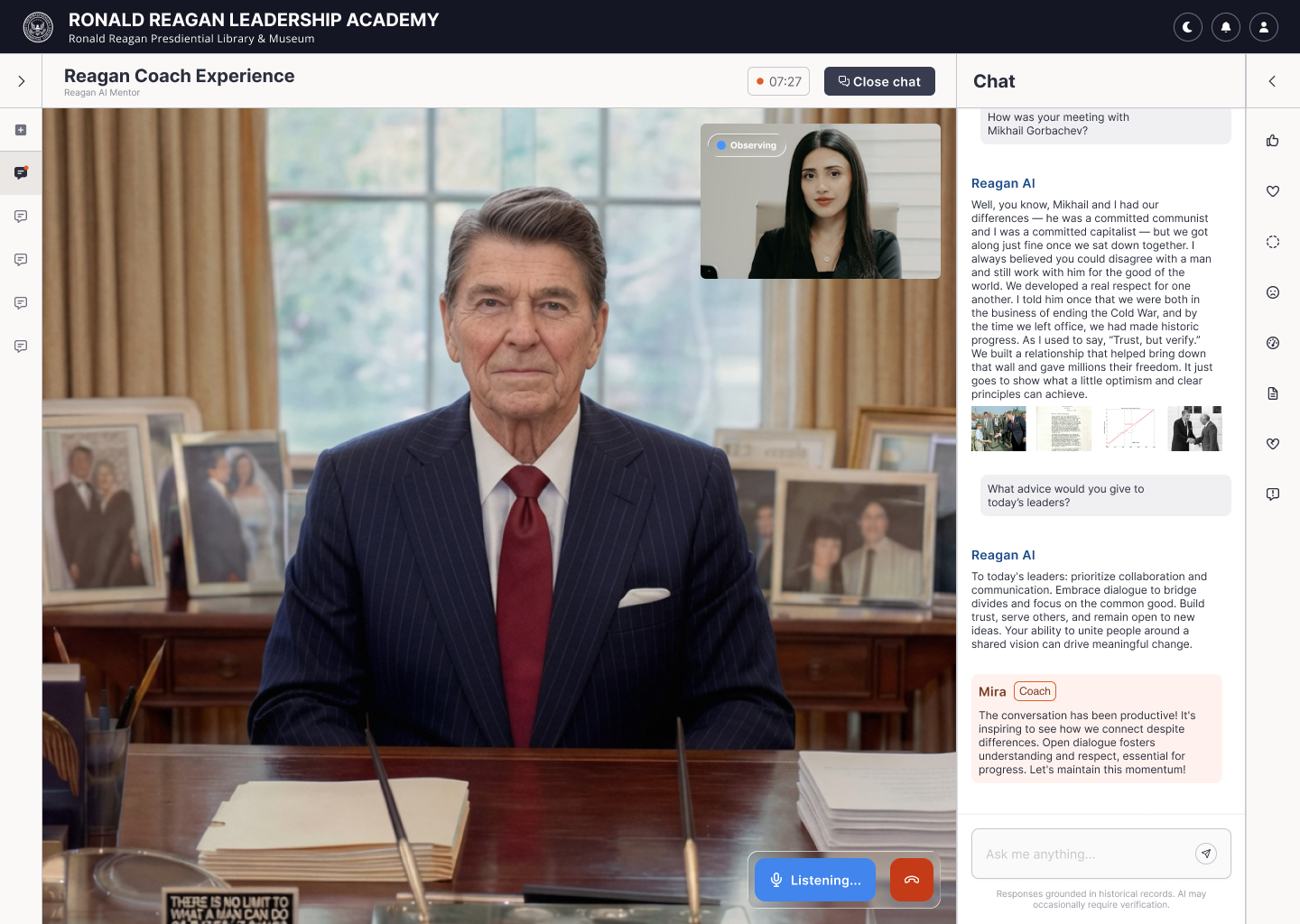
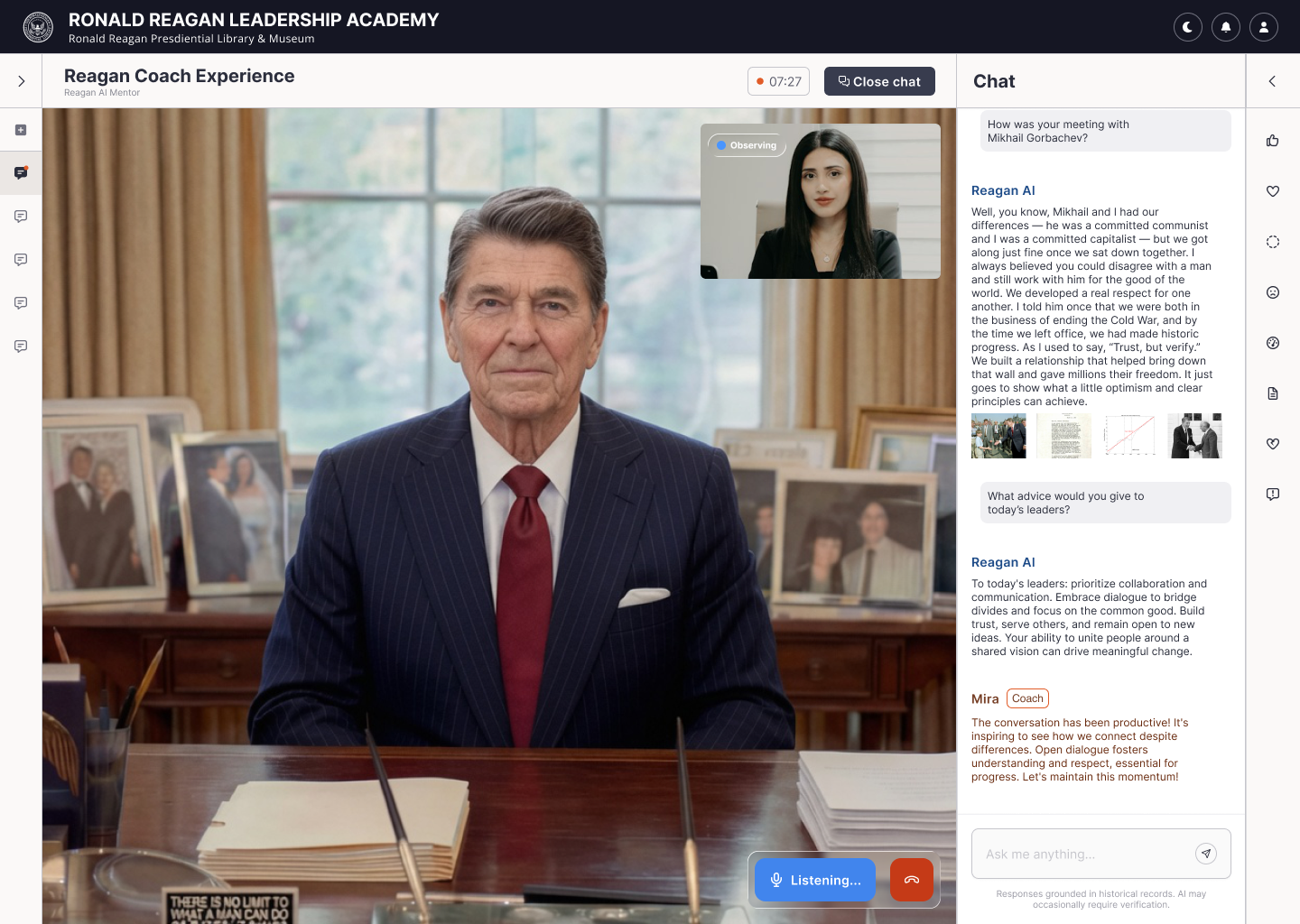
"When two AI voices share one conversation, the design job is making sure the visitor never has to wonder who is talking."
A gap analysis is a design tool. Comparing Reagan against the original Former Presidents project turned a vague "make it match" into a short list of named experiences, and made it clear which ones could be reused and which needed new thinking.
Show variants, not opinions. The chat bubble question could have been a long debate. Three variants side by side, with the same real content in each, let the team see the trade-off in a minute.